 Find a pro near me
Adding a mini split to an Oregon home with a furnace
Get in touch with a local installer about a new mini split.
You already have a furnace, and now you're adding a mini split. That's a common setup in Oregon, where most homes heat with electricity and summers stay warm but dry. A mini split handles the shoulder months and the rooms your furnace never quite reaches, without asking you to replace what already works.
The part that trips people up isn't the mini split itself. It's how it ties into a house built around a furnace. Where the line set runs, how the two systems share a space without fighting each other, whether your electrical panel has room for another circuit. These are questions specific to your house, not a general install.
That's where a contractor who knows Oregon homes and existing furnace setups matters more than the brand of unit you picked out. Someone who's done this pairing before can tell you where the indoor head should go, what the outdoor unit needs around it, and how to keep your furnace and the new mini split from working against each other instead of together.
You don't have to track that person down yourself. Once you send the form, the work of finding someone who fits your situation stops being your problem. A contractor who handles mini split installs alongside existing furnaces will reach out to you directly, already knowing what you're working with.
That's the real value here. Not just getting a mini split mounted on a wall, but getting matched with someone who understands how it has to fit into a house that already has a heating system doing its own job. The answer to how this works in your home comes next. Getting the right person to handle it starts with the button below.
A mini split works alongside your furnace instead of replacing it. Most Oregon homes run on electric heat already, so pairing a mini split with your furnace just gives you a second way to condition the rooms that need it, without touching the ductwork or the furnace itself. The mini split handles a bedroom over the garage, a converted attic, a sunroom, whatever space runs hot or cold no matter what the furnace does. Since summers here stay warm without much humidity, the mini split's cooling side gets real use too, not just its heat. Installing one means running a line set and mounting an outdoor unit, work separate from whatever gas or electric lines feed your furnace. Your furnace keeps doing what it does. The mini split just picks up where it falls short.




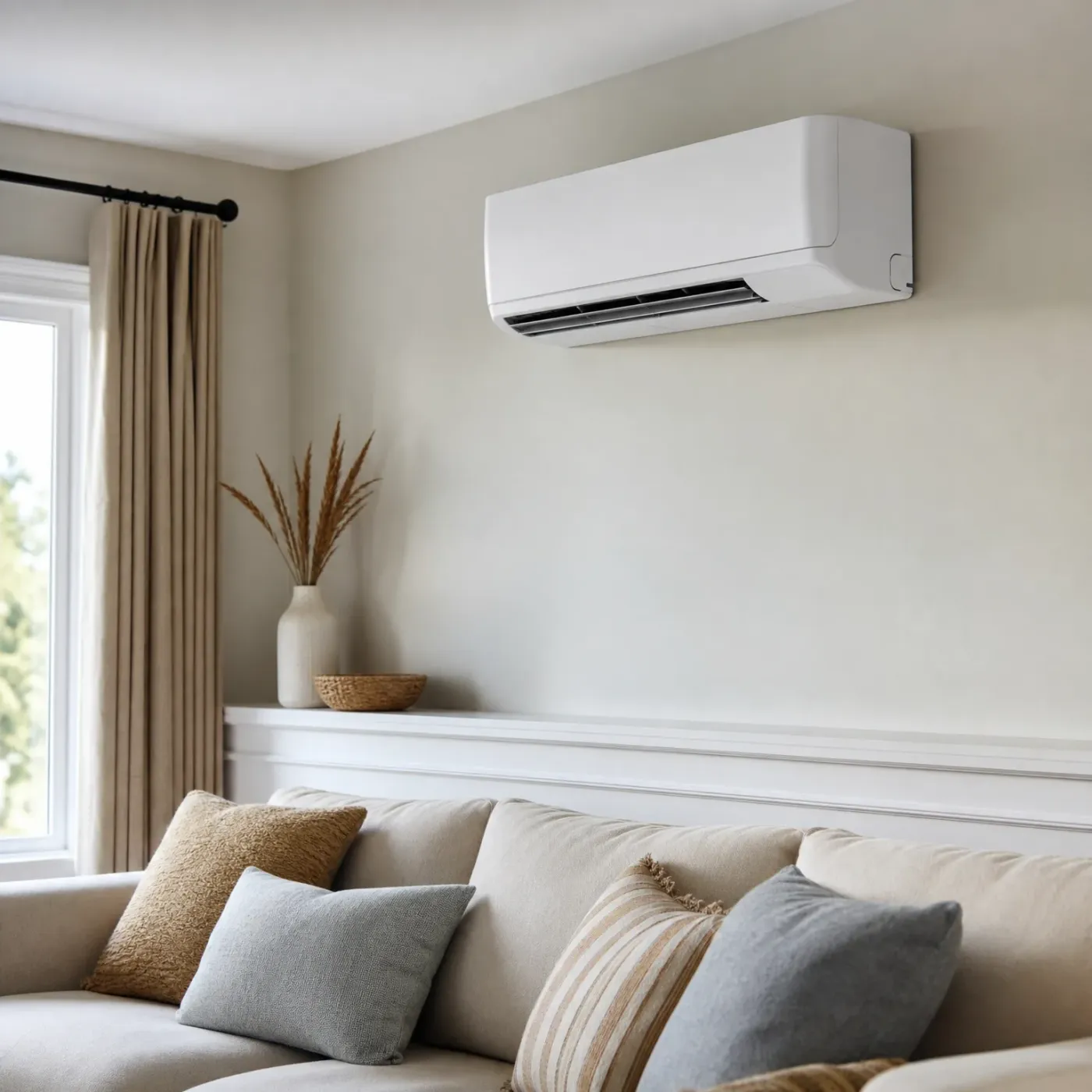
Installing a mini split means putting an air handler on a wall and connecting it to a condenser outside through a line set, run through a small hole rather than ductwork. That line set carries refrigerant both ways. In summer, the indoor unit pulls heat out of the room and sends it outside. In winter, it runs the opposite direction, pulling heat from the outside air and moving it indoors, which is how it keeps working even when temperatures drop. Your furnace doesn't change. It keeps heating the rooms it always has, while the mini split runs on its own thermostat and covers whichever room needs it most, usually the one farthest from a furnace vent or the one that never quite holds its temperature. Outside, the condenser needs open space around it so air can move through the coil, and a location where snow or yard debris won't build up against it. Once everything is connected, the installer wraps and seals the line set and sets the refrigerant charge to match the equipment.
How a mini split actually works
- A mini split installer mounts an indoor air handler on the wall and runs refrigerant line through a small hole to an outdoor condenser, no ductwork involved.
- The indoor unit pulls heat out of the air to cool a room, and reverses that cycle to pull heat from outside air to warm it, even when it's cold out.
- Your furnace keeps working the way it always has, since the mini split runs on its own thermostat and its own zone.
- Most installs put the mini split in the room farthest from a furnace vent or the one that never holds its temperature.
- The outdoor condenser needs clearance on all sides and a spot that won't trap snow or debris against the coil.
- Line sets carry refrigerant between the indoor and outdoor units and get wrapped and sealed once the installer sets the final charge.



Installer picks a wall spot with clear airflow and a path outside.
Installer drills a small hole through the wall for refrigerant line and wiring.
Installer mounts the indoor air handler and connects it to the line set.
Installer sets the outdoor condenser on a pad or bracket nearby.


Matched to your mini split job
Send it once and finding someone is no longer on you.
A local installer who puts in mini splits gets your project.
There's no charge for the request.
One Room or the Whole House
Zone with the mini split
- You set that room's temperature on its own remote, separate from whatever the furnace is doing in the rest of the house.
- A bedroom over the garage or a converted attic that never got good ductwork finally gets even heat or cooling.
- The mini split runs on its own schedule, so you can leave it off in rooms nobody is using.
- Electric heat already costs what it costs in most Oregon homes, so running the mini split in one room instead of pushing the furnace harder is a wash most months.
- The compressor outside only has to move enough refrigerant for the space the indoor unit serves, not the whole house.
Rest of the house on the furnace
- The furnace keeps heating every room on the duct system the same way it always has, mini split or not.
- Nothing about adding a mini split changes how the furnace cycles or how the thermostat on the furnace reads the rest of the house.
- Rooms the ducts already reach well don't gain anything from the mini split and don't need it.
- If the furnace is getting old, that's a separate question from the mini split, and one worth checking on its own timeline.
- During the warm stretch of an Oregon summer, the furnace sits idle while the mini split covers whichever rooms get the most sun.

A dew point of 52°F is a dry one. That's the average across June, July and August in Oregon. Air that dry gives a mini split an easy job. It only has to pull the heat out, not wring a lot of moisture out along with it, so the coil doesn't have to work as hard to leave a room feeling comfortable. You'll notice it in how the room feels right after the unit kicks on, cool rather than cool and clammy. It also means the mini split isn't fighting humidity on top of heat, so a correctly sized unit should keep pace through the warm months without straining. Source: regional climate averages for Oregon.
NASA POWER T2MDEW county cells weighted by homes

A furnace that heats, a mini split that fills in the rest
Your furnace keeps doing what it does. The mini split takes over the room or two that never felt right, and gives you a way to cool the house on the handful of warm days without asking the furnace to do a job it wasn't built for. Nothing about your ductwork or your gas line has to change for that to work.
Getting the sizing and the placement right is what separates a mini split that quietly does its job for years from one that struggles with a room it was never matched to. That part comes down to whoever installs it. Once you send the form, finding that person isn't something you have to sort out on your own anymore. A contractor who works on homes like yours gets in touch, and you can ask them about your specific room, your furnace, and how the two are meant to work together.


Mini Split Installation
A mini split pro near you

- Describe your mini split job, and a local pro who handles it gets in touch.
- Say what's going on with your mini split, and a pro who works on them reaches out.

- One request ends the search for a mini split installer.
- Once you send the form, finding a pro is off your list.

- Skip the round of in-home estimates for a new mini split.
- Describe the project once instead of to every installer.

- The pro who reaches out is licensed in Oregon.
- Only one pro gets your request, so you hear from one company.