Running steady at 68 to 70
The unit holds its temperature without cycling hard or icing up outside. Air moves evenly out of the vents, and the room keeps pace with the setting instead of lagging behind it on a cold morning.
Set it to heat mode and pick a temperature between 68 and 70, then leave it alone. Mini splits run most efficiently holding a steady setting rather than being bumped up and down through the day. In Oregon, winter mornings dip close to freezing in a lot of areas, and the outdoor unit works hardest then, pulling heat out of cold air. If you see frost building on that outdoor unit, don't panic. It should run a defrost cycle on its own and clear it within a half hour or so. If frost stays packed on for longer than that, or ice is building up underneath, that's a sign something needs a look, not something to wait out. Keeping the setting steady and catching that kind of thing early is what keeps the system running well through a wet, cold Oregon winter instead of struggling through it.



The unit holds its temperature without cycling hard or icing up outside. Air moves evenly out of the vents, and the room keeps pace with the setting instead of lagging behind it on a cold morning.

A mini split left unchecked through a winter collects dust on the front filter and grime on the casing. Airflow drops, the unit works harder to hit 68 or 70, and a coil hidden behind that dirt can start to ice over.
You turn the heat down at night the way you would with a furnace, figuring the unit should rest while you sleep. Then the bedroom is cold at 6 a.m. and it takes a while to catch up, or you notice frost on the outdoor unit by morning. A mini split doesn't work the way a furnace does, and setting it back overnight is costing you more than it saves.
A furnace fires up, heats the air fast, and shuts off. A mini split pulls heat from the outside air and moves it inside, and that takes longer per degree, especially once it's near freezing outside. Turn the setting back 8 degrees overnight and the compressor has to run flat out for a long stretch in the morning to catch up, right when the outdoor coil is most likely to frost over. Hold it at 68 to 70 all night instead and the compressor runs at a lower, steady speed the whole time. It uses less power overall and never has to claw back a large temperature drop on a cold Oregon morning.
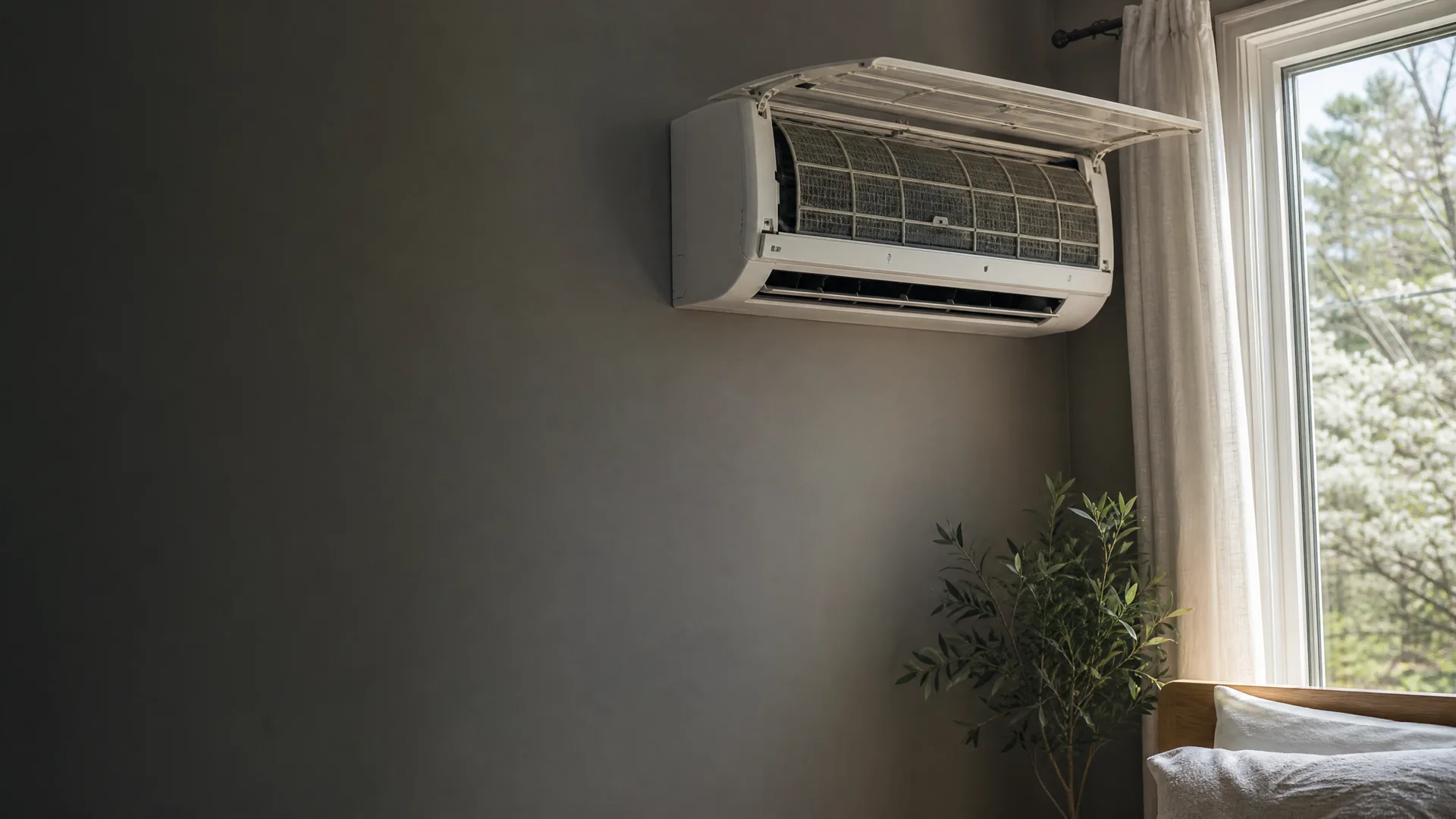
Spring sun comes through the blinds, warm enough that the mini split hasn't kicked on all morning. You pop the front cover to wipe it down before summer and find the filter screen behind it grey with dust, a whole winter of it packed into the mesh. It caught you running the unit through those cold mornings, steady and barely off. Now the screen looks like it's been fighting that whole time without a break. You think about calling someone before it gets worse, a local contractor who handles mini splits all year and knows which parts clog first in a house like yours, someone who'd look at this exact unit instead of guessing over the phone.
A licensed local pro takes the request for your mini split tune-up.
Asking costs nothing, and the choice to hire stays yours.
Your mini split doesn't make heat the way a furnace or a baseboard does. The outdoor unit pulls heat out of the outside air itself, even when that air is cold, and a reversing valve turns the refrigerant cycle around so heat moves into your house instead of out of it. That's the whole system working backward from how it runs in July.
Cold outdoor air holds less moisture capacity, and once the outdoor coil drops below about 25 to 30 degrees, frost can build up on it. When that happens, the unit runs a defrost cycle, briefly reversing the valve again so hot refrigerant melts the ice off the coil before going back to heating. You might notice the indoor fan pause or slow down during this, and that's the system keeping cold air from blowing into the room while it defrosts outside. It isn't a fault.
Inside, a thermistor near the indoor coil checks the room temperature every few seconds. Instead of switching the compressor fully on and off like an old thermostat would, it ramps the compressor speed up or down to match what the room needs.
A dirty filter changes this picture. It blocks airflow across the indoor coil, which throws off what the thermistor reads and can push the outdoor unit into defrosting more often than it should. The freeze sensors on that outdoor coil, not your thermostat setting, are what call for defrost in the first place.


You've got it set right and it's still running most of the day, blowing air that feels cooler than it should. The room by the window never quite catches up, and you notice the outdoor unit humming longer stretches than it used to. Some mornings it seems to run and run without the house getting any warmer. That's usually a dirty filter or a coil losing its grip on the cold outside air, not the setting. Left alone through a whole winter, it means the unit leans harder on backup electric heat to make up the difference, and that backup heat costs more to run than the mini split pulling heat from outside air on its own.





Oregon summers don't carry the heavy, sticky air you get elsewhere. Averaged across June, July and August, the dew point here runs 52°F, which is dry enough that your mini split barely works for its cooling in summer. That matters for winter because a unit that's coasted through summer heads into heating season without having to fight humidity-driven wear on the coil. The bigger strain on it comes later, from frost and defrost cycles in the cold months. A unit that went into fall clean, with a clear filter and coil, handles that load better than one already working harder than it should. Source: NOAA climate normals for Oregon.
NASA POWER T2MDEW county cells weighted by homes


At 15.46 cents a kilowatt-hour, holding your mini split steady instead of cycling it hard all day keeps the draw down. A unit fighting a frosted coil or a dirty filter pulls more power to make the same heat, and that shows up on the bill before you'd guess why.
EIA-861 2025 statewide residential average
Indoor thermostat calls for heat and signals the outdoor unit
The reversing valve switches the refrigerant cycle to pull heat from outside air
Refrigerant absorbs heat from the outdoor coil even in cold air
The compressor pressurizes refrigerant to raise its temperature further

That's the whole answer. A steady setting in that range, with the outdoor coil clear and the filter clean, gets you through an Oregon winter without the unit working harder than it has to. Everything else is upkeep around that one setting.
Upkeep is where most people fall behind, not because the answer is complicated but because the filter and coil are easy to forget until the unit is already straining. If you'd rather have someone local check the coil, clear the filter and catch anything else before it costs you heat on a cold morning, you can get matched with a licensed contractor in Oregon who works on mini splits all winter and knows what tends to go wrong on them. You'd hear from that one contractor directly, not a handful of companies competing for the job.

Get the right pro for your mini split