
Running the way it should
Set to heat, the unit warms up fast and holds there. The air coming off the coil feels warm within a minute or two, and it stays warm until the room hits the temperature you set.
You go to check on your mini split and cold air is coming out even though it's set to heat, or it's blowing cold before it warms up. In Oregon, where most homes lean on electric heat, that's not a small annoyance. You want to know if something's actually wrong before it turns into a bigger repair.
A mini split blows cold air on purpose for a minute or two when it first switches into heat mode, while the system reverses and the indoor coil clears. That's normal. If the cold air keeps coming past that, the reversing valve that switches the unit between heat and cool may be stuck, or the unit could be stuck in a defrost cycle longer than it should. On a system you're counting on through an Oregon winter, this is worth catching early. A unit that won't properly switch to heat isn't just uncomfortable, it's running the compressor without doing the job you need from it.

Set to heat, the unit warms up fast and holds there. The air coming off the coil feels warm within a minute or two, and it stays warm until the room hits the temperature you set.

Dust and grime on the casing and vents usually mean the filter and coil behind them are just as dirty. A blocked coil can't absorb heat the way it needs to, and that shows up as cold or lukewarm air instead of warm.
A mini split set to heat will blow cool air for a minute while the coil comes up to temperature. That's normal. What's not normal is air that stays cool for five or ten minutes, or never warms up at all. You might also notice the outdoor unit isn't running, or it's running but frosted over with no defrost cycle kicking in. Some homeowners catch a burning or musty smell from the indoor head, or hear the compressor short cycling instead of holding steady. In a home that heats with electricity, a unit stuck blowing cold means the electric backup or another system is covering the load, and the bill reflects that whether or not anyone notices the cold air itself.
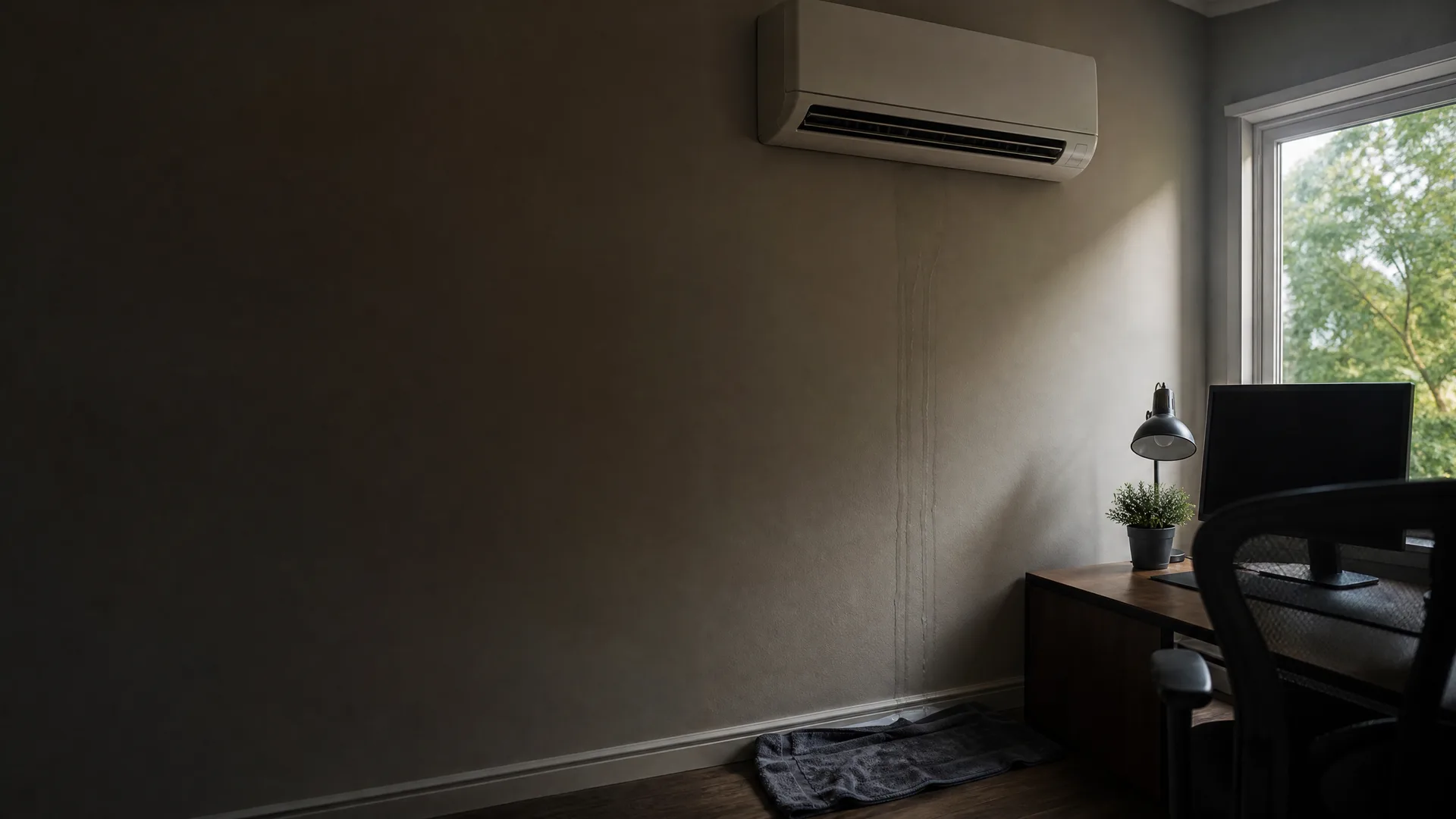
You're at your desk working in the afternoon when you notice the wall under the indoor unit looks wrong. A wet streak has run down from the housing, dark against the paint, and it's already reached the baseboard. You go grab a towel and put it on the floor where the drip keeps landing. The unit is still running, still blowing air that feels cooler than it should for a mid-afternoon in Oregon with the heat on. You stand there a second, towel underfoot, and realize this has probably been going on longer than today.


A mini split doesn't make heat the way a furnace does. It moves heat from outside air into your house using refrigerant and two coils, one outside and one on the wall inside. Refrigerant picks up heat outdoors, carries it in, and releases it through the indoor coil, which is why that coil needs to run warm for the room to feel warm. A reversing valve decides which direction the system runs. In cooling mode it sends heat outside, in heating mode it's supposed to flip and send heat inside. If that valve sticks halfway, the indoor coil can end up cold instead of warm, even with the thermostat set right.
The charge of refrigerant matters too. If it's low, less heat makes it to the indoor coil on each pass, so the air blowing out never gets far above room temperature. Outside, the coil can ice up in damp, mild weather the way Oregon gets plenty of, and a frozen coil can't absorb heat from the air until it thaws. Normally a defrost cycle handles that automatically, clearing the ice before it becomes a problem. When the sensor that triggers defrost fails, the outdoor coil keeps icing over, and the indoor unit keeps blowing air that never had heat to carry. The indoor fan doesn't wait for any of this to sort itself out. It runs on its own schedule, so it can push air past a coil that's iced over, undercharged, or running backward, and you feel it as cold air instead of heat.



Summer air in Oregon holds a dew point around 52°F, averaged across June, July and August for where homes here sit. That's dry air, and it matters to a mini split in a way a lot of people don't expect. A heat pump running in heat mode still has to pull moisture off the outdoor coil before it can pull heat off it, and dry air gives up less water to work through. If your coil is clean, that's one less thing fighting the system, and warm air should come up fast once you switch over. If it's blowing cold and staying cold, dry air outside isn't the cause, and a contractor who knows mini splits can tell you what is.
NASA POWER T2MDEW county cells weighted by homes
One request and the search for a pro is handled.
Asking costs nothing, and the choice to hire stays yours.
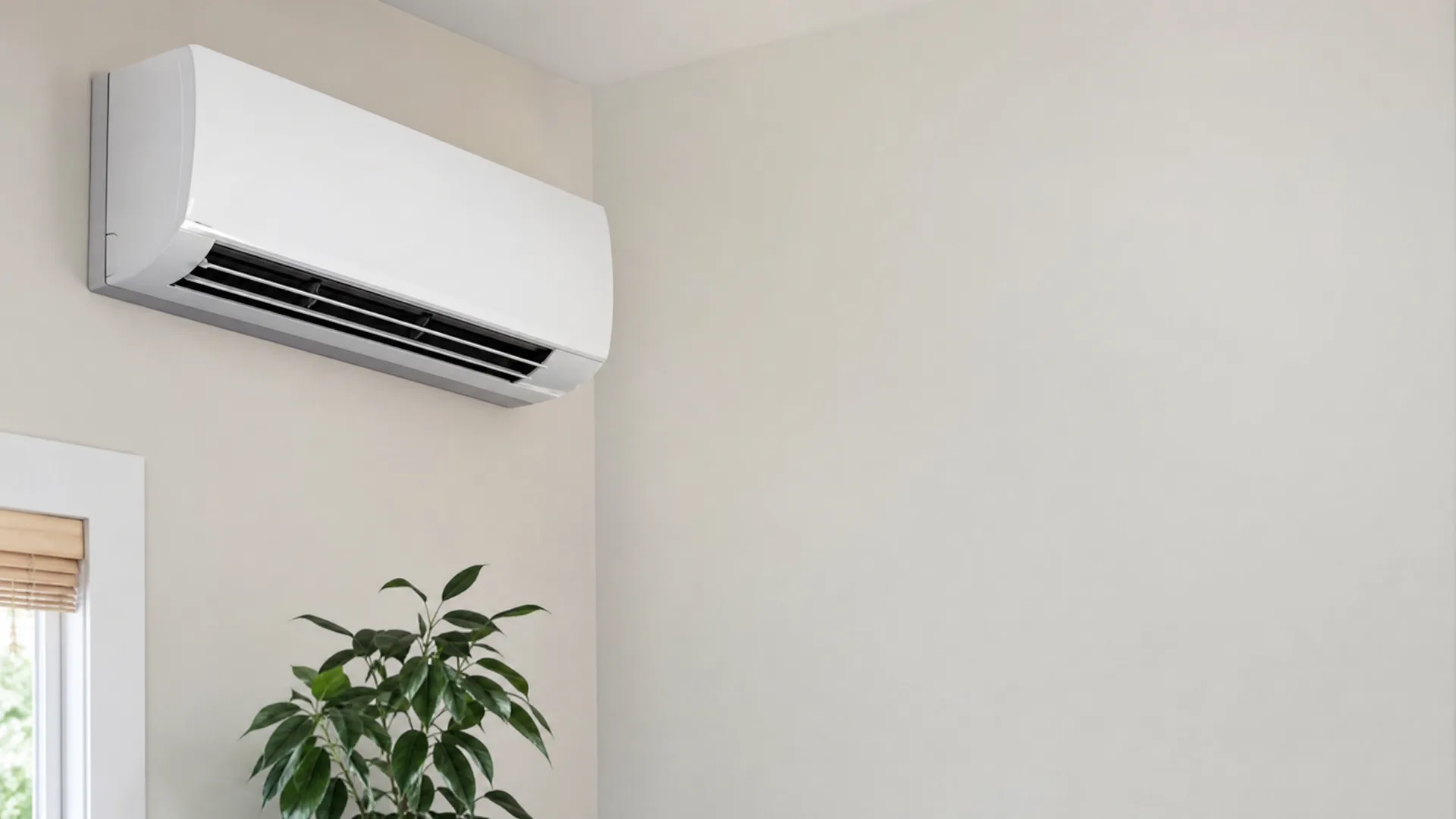
The reversing valve moves on a magnetic pin, and that pin only shifts when the system builds enough pressure difference between the two coils. If refrigerant is low, or the valve itself has worn, it can't get that push. Oregon winters don't put much strain on the valve since the unit rarely has to defrost, so a stuck valve here usually comes from age or a slow leak rather than overuse.
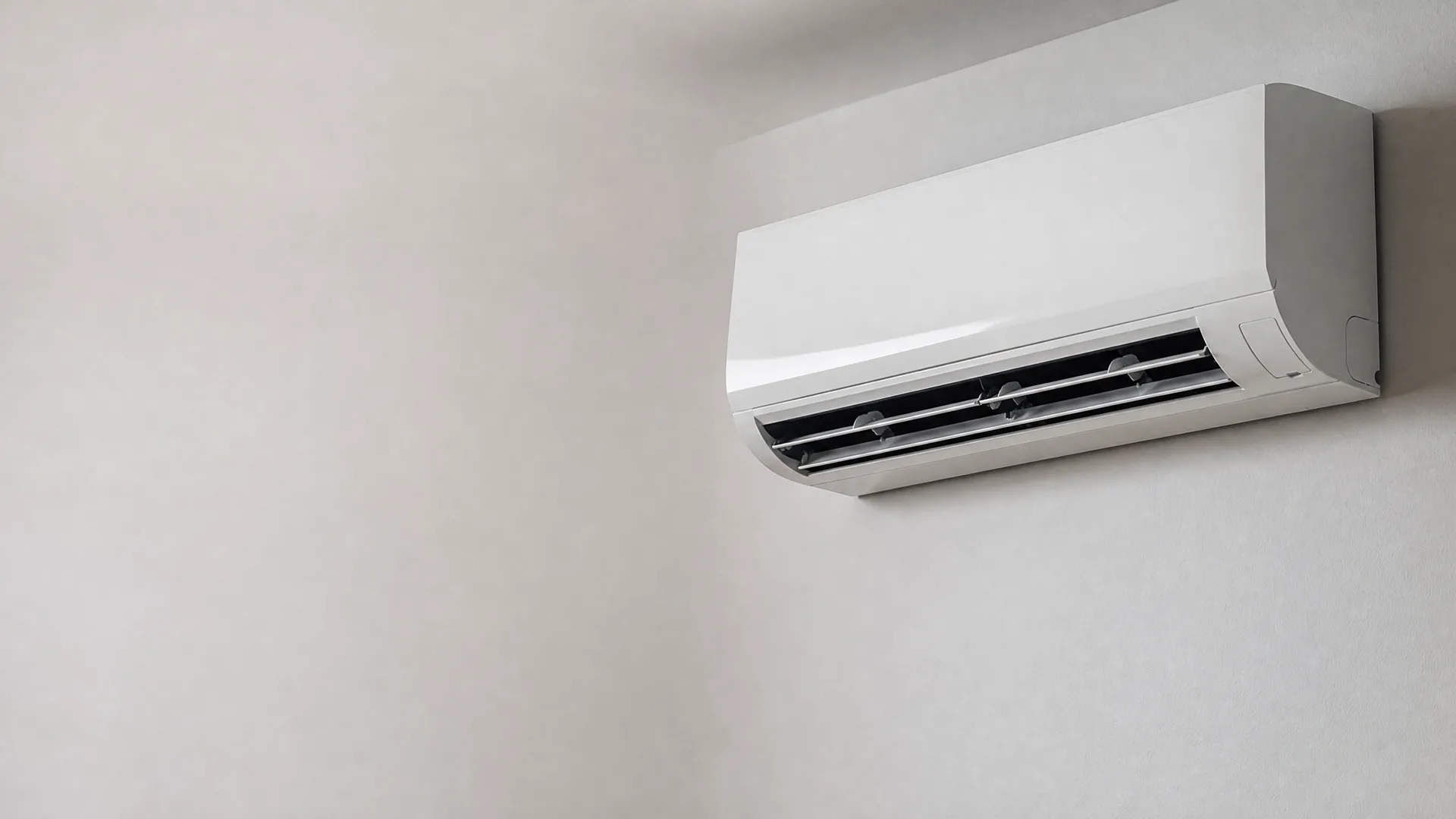
An indoor coil free of dust has more surface area touching the air passing over it, so it transfers heat faster and the blower doesn't need to run as long to bring a room up to temperature. A coil packed with grime loses contact with that air. Refrigerant inside can be at the right temperature and pressure, and the air leaving the vents will still feel weak or cold, because the heat never made it across.

A mini split that won't warm up is the unit you're probably counting on for the whole house, since most homes in Oregon heat with electric systems like this one. If it's stuck blowing cold, the room it serves is going to sit cold, and the thermostat reading on the wall won't match what you feel standing under the unit. Electric heat that isn't actually heating still draws power. You'll notice the unit running, the fan on, everything that looks normal, while the room never gets there.
Letting it ride for a few days to see if it sorts itself out usually means a few more days of a cold room and a system working against itself. Sending in what you're seeing, the room it's in, whether it ever warms up at all, lets a contractor who works on mini splits in your area get in touch and start from what you already know instead of starting over. You've done the part that matters, catching it early. The rest is matching the problem to someone who can get into the unit and find out which part gave out.





At 15.46 cents a kilowatt-hour, a mini split stuck blowing cold doesn't show up as a huge spike on its own, but it runs and runs without ever heating the room, and that's power spent for nothing. Worth getting looked at before the unit just keeps cycling like that.
EIA-861 2025 statewide residential average
You're the kind of person who checks a strange noise before it turns into a bigger repair, and that habit works in your favor here. A reversing valve that's just starting to stick, or a coil with a light film on it, is a smaller fix than one that's been running backward for weeks. Catching it when the air is only lukewarm instead of fully cold gives a contractor more to work with and fewer parts that have had time to wear from the strain. Waiting until the unit gives up completely on warming the room takes that option off the table.
It's tempting to let a mini split blowing cold sit for a few days, especially if another room or a space heater is covering the gap. But a stuck reversing valve doesn't fix itself, and a dirty coil only picks up more grime the longer it runs. Every day it operates in that state is a day the compressor works against a system that isn't set up right, and a day of power spent without warming the room. The longer it goes, the more likely a simple adjustment turns into a part that needs replacing outright.


A mini split blowing cold air on heat mode almost always comes down to the same handful of things: a reversing valve that's stuck, a coil too dirty to pull heat from the air, or refrigerant low enough that the system can't build the pressure it needs. You caught this early, before the room went cold for good and before the unit spent a winter running without doing its job. That's the habit that saves people money in Oregon, where electric heat means this unit is probably carrying the house. Once you send the form, you're done hunting for someone to call. A contractor who handles this equipment gets matched to what you described, and reaching out to you is their job from there, not yours. You don't have to diagnose the valve or the coil yourself. You just have to get it in front of someone who can.





Send it once and finding someone is no longer on you.
No fee to send it, and nothing to sign.
