

Running quiet, like it should
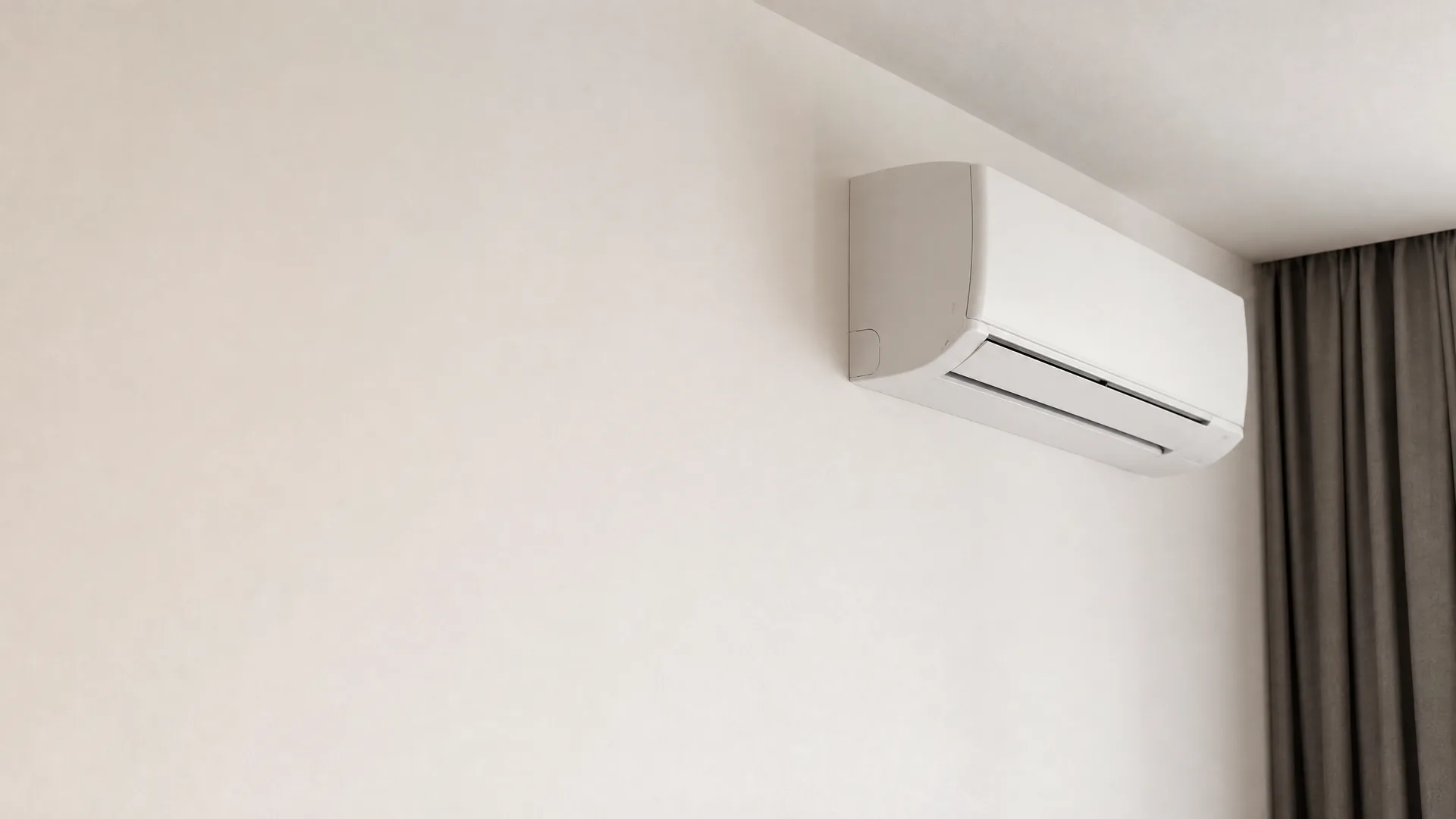
This is what a mini split sounds like most of the year. The case stays clean, the vents stay open, and the only sound is air moving. No clicking beyond the normal defrost cycle, no hum that makes you turn up the TV.
Get the mini split repair search off your mind today.
Hand off the searchOregon winters put a mini split through its hardest work, running for hours at a stretch to keep up with the cold. When it starts clicking, cracking, or humming louder than it did in the fall, it's natural to wonder if that's just how the unit sounds under load, or if something inside it needs attention before it gets worse.
A mini split that runs long hours through an Oregon winter will tick and hum as the refrigerant lines expand and the fan speeds up and down to hold the temperature. That's ordinary. What's not ordinary is a buzz from the outdoor unit, a rattle from the indoor head, or a grinding sound that wasn't there before the cold set in. Those point to something specific: a fan blade out of balance, a loose panel, ice building up on the outdoor coil, or a compressor under strain from running nearly nonstop. Electric heat pumps like these work hardest exactly when Oregon gets coldest, and that extra load is often what turns a quiet unit noisy. The longer a new sound runs, the more likely it's a part wearing down rather than the system just doing its job.






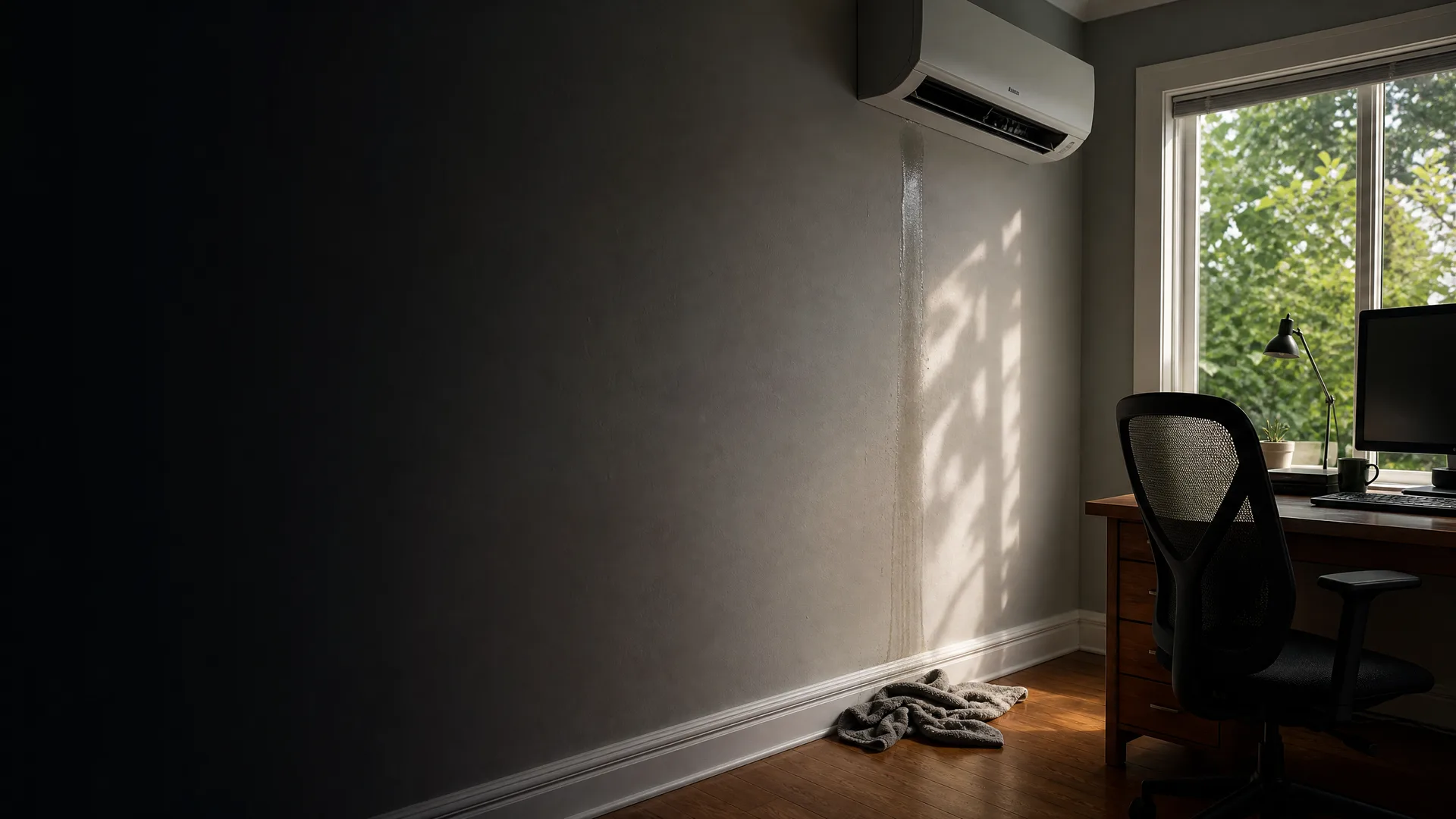
It's late on a summer afternoon and you're still at your desk, trying to get through one more thing before dinner. You notice the wall first, a dark wet streak running down from the indoor unit toward the baseboard. You go get a towel and lay it on the floor under the drip, the way you have a dozen times before with other small house problems. Outside, the air is warm but not heavy, nothing like what you've heard summer feels like elsewhere. The mini split keeps running above you, and you stand there a second longer, watching the streak to see if it's still spreading.

This is what a mini split sounds like most of the year. The case stays clean, the vents stay open, and the only sound is air moving. No clicking beyond the normal defrost cycle, no hum that makes you turn up the TV.

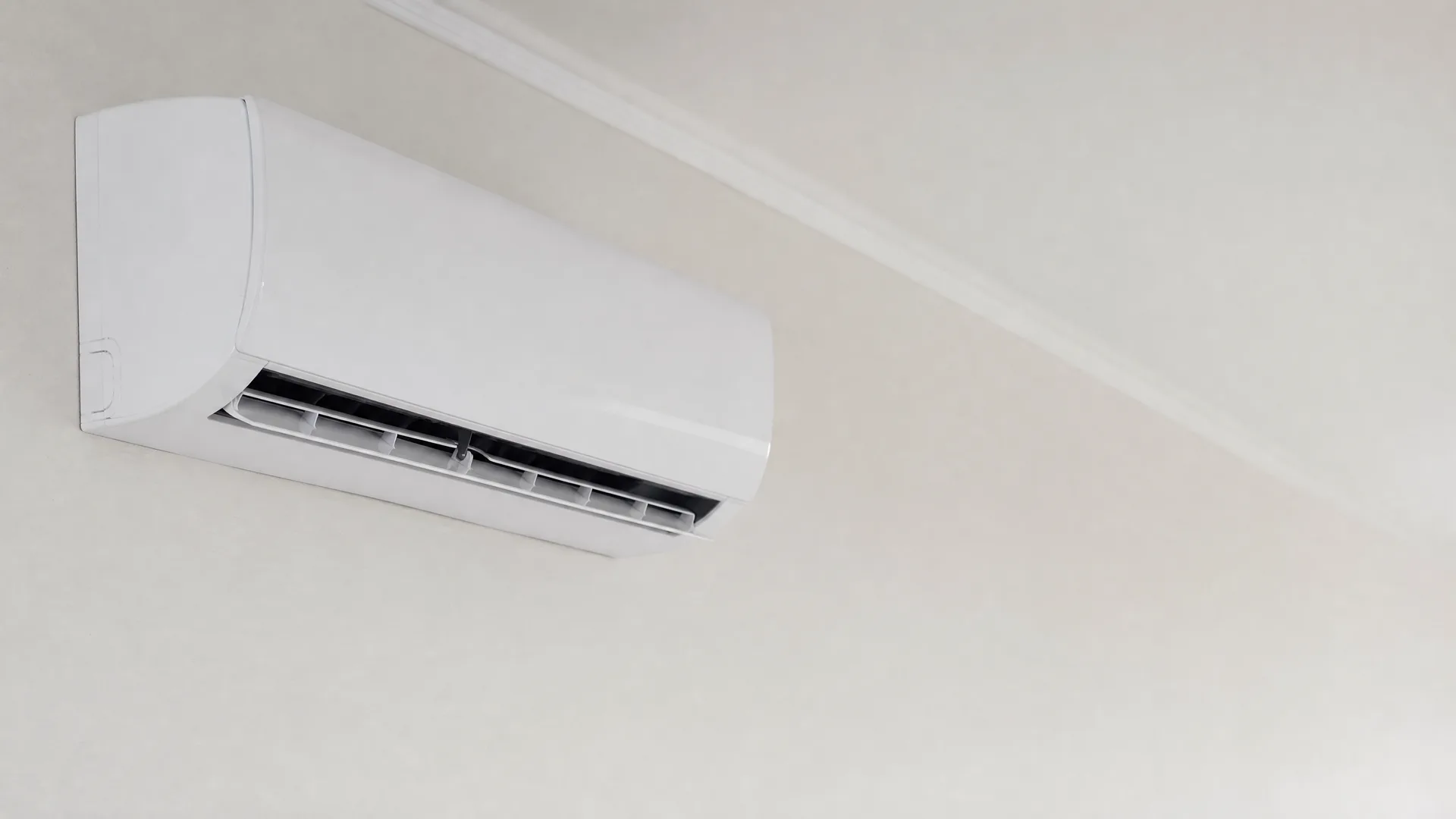
When the casing looks like this, the coil behind it is probably just as caked. Dust blocks airflow across the coil, so the system runs longer and louder to move the same heat through a colder winter night.


Outdoor temperatures near freezing let frost build on the outdoor coil, and the mini split has to stop and melt it off or it can't pull heat from the air anymore. That's the reversing valve switching direction, and the clicking you hear is it opening and closing. A fan that briefly slows or stops during this cycle is normal too. The system isn't struggling or breaking down when it does this. It's a built-in step that runs more often on colder nights, which is why the noise gets more noticeable as an Oregon winter sets in rather than staying constant.
A failing fan motor bearing makes a grinding or scraping sound that doesn't come and go with the defrost cycle, it's just there whenever the fan spins. A compressor with a refrigerant charge problem can make a louder, more constant hum than the one tied to a cold snap, and it won't ease up once the temperature does. Loose mounting brackets or panels rattle at a pitch that changes with fan speed, not with outdoor conditions. The difference that matters is timing: defrost noise tracks the cold, a worn part's noise doesn't care what the thermometer says outside.



Summer here isn't the problem for your mini split. The air averages a 52°F dew point across June, July and August where Oregon homes sit, according to NOAA climate normals, which is on the dry side as these things go. A mini split moving that air doesn't fight the moisture the way one in a muggy state would, so the coil isn't working overtime to wring water out of the air all summer. That matters for winter noise because a coil that hasn't been strained by humidity half the year is one less thing adding wear before the cold sets in. The clicking and humming you're hearing now has another cause, and tracking it down yourself means calling around and explaining the same noise to contractor after contractor. Send the form once and that search is off your plate.
NASA POWER T2MDEW county cells weighted by homes
A mini split running hard through an Oregon winter will tell you about it in sound before it fails outright. Some of that noise is the defrost cycle doing its job. Some of it is a part wearing down, a fan blade knocking loose, a motor bearing going dry. Telling those apart from the inside of your house, over the sound of the thing itself, is hard to do with any confidence. That's the part worth handing off. Instead of searching through contractors, calling a few, explaining the clicking or the humming each time, then sitting with quotes trying to guess which one is fair, you send one request and the search is done. No one else gets that request but the contractor matched to it, and there's nothing owed for sending it. What's left is the actual work, someone listening to your unit and telling you what that sound really is.

This is a mini split working through a cold snap the way it's built to. The case is clean, the vents sit open, and any sound is air moving or the defrost cycle switching on and off at the usual intervals. Nothing rattles, nothing hums louder than it did last month.

Dust like this on the casing usually means buildup on the coil behind it too, and that makes the system work harder than it should through the cold months. A unit left like this is more likely to be the one clicking, cracking, or humming past what the defrost cycle accounts for.
Electricity here runs 15.46 cents per kilowatt-hour, close to the national average. Since your home likely heats with electricity, your mini split is doing most of the work all winter. A new noise now is worth checking before a struggling part drives that bill higher.
EIA-861 2025 statewide residential average
The clicking starts around six most nights, right when the heat kicks up and you're trying to focus on something at the kitchen table. You turn the volume up a little, or you just tune it out, because calling around for help isn't how you want to spend the evening. A week goes by, then another, and the sound hasn't gone anywhere. It's still there under whatever you're doing, waiting for you to deal with it.
Send the form and the search is done. No calling three places and repeating the same description of the noise each time, no sitting with quotes trying to guess which one is fair. A contractor who works on mini splits in Oregon winters gets the details instead, and you get your evening back to spend on whatever you'd rather be doing. The part that was yours to do is finished once you send it.
A mini split that clicks when it starts a defrost cycle is doing what it's built to do. One that hums louder than it did in October, rattles, or grinds is telling you a part is wearing down, and that gets worse the longer an Oregon winter asks it to run. You don't have to figure out which sound is which on your own, or spend an evening calling around, explaining the noise over and over to whoever picks up, then sorting through quotes to guess who's worth trusting. Send the form and that search is done. You get handed to a contractor who already knows mini splits and can tell you straight whether it's the defrost cycle or something failing behind the case. The noise has an answer. Finding someone who knows it shouldn't take your whole evening too.

Hand off the search today



